We may earn a commission when you buy through our links. Learn more
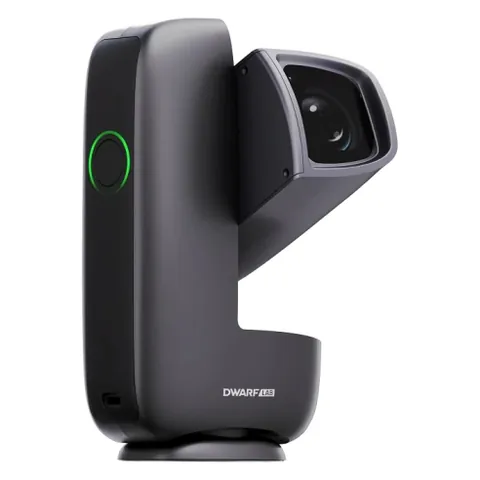
Answer: DwarfLab Dwarf Mini at $419 (cheapest smart telescope) or Unistellar eQuinox 2 at $2,319 (cheapest with 100 mm or more). Prices checked Nov 7.
Check price at High Point ScientificLowest price that meets each rule
Rule: the cheapest in-stock smart telescope, and the cheapest with 100 mm or more of aperture.
DwarfLab Dwarf Mini
Cheapest smart telescope
For a first smart telescope on the smallest budget: 30 mm, 150 mm focal length.
- Aperture
- 30 mm (1.2 in)
- Type and aiming
- smart telescope, automatic (app, camera)
Pro lightest budget
Con smallest aperture in the group
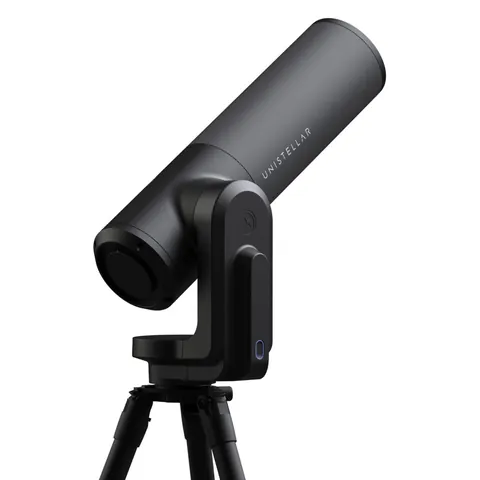
Unistellar eQuinox 2
Cheapest with 100 mm or more
For fainter targets, with more light per exposure: 114 mm, 450 mm focal length, field 34.2 × 45.6 arcmin.
- Aperture
- 114 mm (4.5 in)
- Type and aiming
- smart telescope, automatic (app, camera)
- Weight
- 15.5 lb
Pro more light per exposure
Con 15.5 lb heaviest piece
$2,319 $2,899
Prices checked November 7, 2026. Method, sources and formulas
Contents
A smart telescope is a camera, a lens or mirror, a motorized mount and an app in one box. It finds, tracks and stacks images on your phone. They differ mostly in aperture and focal length, which set how much light each exposure gathers and how large the field is. We read 12 models on November 7, 2026, from Unistellar's and Seestar's stores, Celestron's and High Point Scientific.
How do the smart telescopes compare?
| Smart telescope | Aperture | Focal length, f/ | Field of view (published) | Limiting magnitude | Weight | Prices (cheapest first) |
|---|---|---|---|---|---|---|
| DwarfLab Dwarf Mini | 30 mm (1.2 in) | 150 mm, f/5 | n/a | n/a | n/a | High Point Scientific $419 |
| DwarfLab Dwarf 3 | 35 mm (1.4 in) | n/a, f/n/a | n/a | n/a | 2.9 lb | High Point Scientific $549 |
| ZWO Seestar S30 Pro | 30 mm (1.2 in) | 160 mm, f/5.3 | n/a | n/a | 3.64 lb | Seestar (ZWO) $699 High Point Scientific $699 |
| Vaonis Vespera II | 50 mm (2.0 in) | 250 mm, f/5 | n/a | 16 (brand figure) | n/a | High Point Scientific $1,192.50 |
| Unistellar Odyssey | 85 mm (3.3 in) | 320 mm, f/3.9 | 33.6 × 45 arcmin | 17.2 (brand figure) | 14.3 lb | Unistellar $2,079 |
| Vaonis Vespera Pro | 50 mm (2.0 in) | 250 mm, f/5 | n/a | 16 (brand figure) | n/a | High Point Scientific $2,242.50 |
| Unistellar eQuinox 2 | 114 mm (4.5 in) | 450 mm, f/4 | 34.2 × 45.6 arcmin | 18.2 (brand figure) | 15.5 lb | Unistellar $2,319 |
| Unistellar Odyssey Pro | 85 mm (3.3 in) | 320 mm, f/3.9 | 33.6 × 45 arcmin | 17.2 (brand figure) | 14.3 lb | Unistellar $3,679 |
| Unistellar eVscope 2 | 114 mm (4.5 in) | 450 mm, f/4 | 34.2 × 45.6 arcmin | 18.2 (brand figure) | 15.5 lb | Unistellar $3,999 |
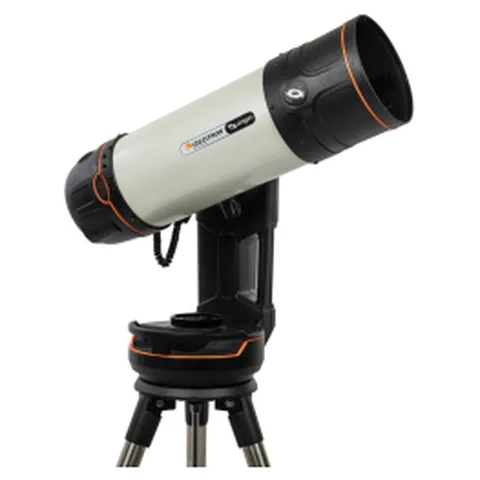 Celestron Origin Intelligent Home Observatory | 152 mm (6.0 in) | 335 mm, f/2.2 | 1.32° x 0.75° | n/a | 41.6 lb | High Point Scientific $4,299 |
What does aperture buy in a smart telescope?
Light collected grows with the area of the aperture, the square of its diameter: 50 mm gathers 2.8 times as much as 30 mm, 85 mm 2.9 times as much as 50 mm, and 114 mm 1.8 times as much as 85 mm. Resolution follows the Dawes limit: 3.9" at 30 mm, 2.3" at 50 mm, 1.4" at 85 mm, 1.0" at 114 mm (Wikipedia, Dawes' limit). The camera and processing then do the rest, and no formula captures them.
How much sky fits in one frame?
A short focal length gives a wide field. The full Moon is 31.6 arcminutes across (NASA). Unistellar publishes 33.6 x 45 arcmin for the Odyssey and Odyssey Pro and 34.2 x 45.6 for the eQuinox 2 and eVscope 2. Other brands' fields are not on the pages we read; where a figure is missing the chart says so.
How do Unistellar’s four models differ?
Odyssey and Odyssey Pro: 85 mm mirror, 320 mm focal length, f/3.9, 4 kg (8.8 lb). eQuinox 2 and eVscope 2: 114 mm, 450 mm, f/4, 7 kg (15.5 lb). The Pro and eVscope 2 add an electronic eyepiece developed with Nikon, per Unistellar. All figures from Unistellar's comparison page, read November 7, 2026. Which of the four to pick, with the November 14 prices: Unistellar Odyssey vs eQuinox 2.
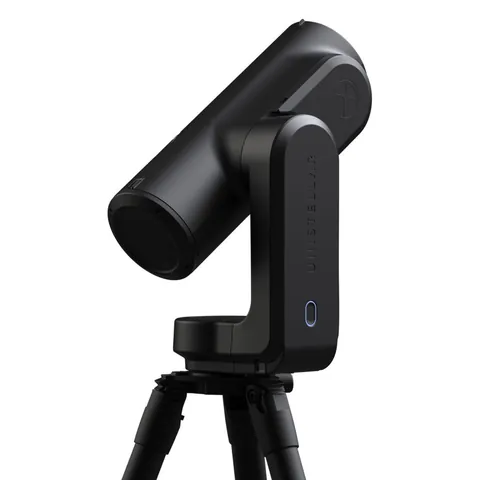
Unistellar Odyssey
Unistellar's 85 mm model
85 mm mirror, 320 mm focal length, 33.6 x 45 arcmin field, 8.8 lb, carry-on size per Unistellar.
- Aperture
- 85 mm (3.3 in)
- Type and aiming
- smart telescope, automatic (app, camera)
- Weight
- 14.3 lb total
Pro fits a full Moon in the frame
Con no eyepiece (the Odyssey Pro adds one)
$2,079 $2,599price checked Nov 7
Unistellar eQuinox 2
Unistellar's 114 mm model
114 mm mirror, 450 mm focal length, published limiting magnitude 18.2, 15.5 lb.
- Aperture
- 114 mm (4.5 in)
- Type and aiming
- smart telescope, automatic (app, camera)
- Weight
- 15.5 lb
Pro 1.8 x the light of the 85 mm models
Con heavier: 7 kg
$2,319 $2,899price checked Nov 7
Two head-to-heads people ask about most: Seestar S50 vs Unistellar Odyssey and Vespera Pro vs Unistellar Odyssey.
Want an eyepiece instead? See what a regular telescope shows in What will I see? and compare all models in the telescope comparison.
Frequently asked questions
Seestar vs Unistellar: what is the real difference?
Aperture and price. On published figures, the Seestar S30 and S50 have 30 and 50 mm lenses; the Unistellar Odyssey has an 85 mm mirror and the eQuinox 2 and eVscope 2 a 114 mm mirror. Collecting area grows with the square of the aperture: 114 mm gathers about 5.2 times the light of 50 mm. Prices differ just as much; see the table.
Will the Moon fit in the field of view?
The full Moon is 1896 arcseconds, about 31.6 arcminutes (NASA). Unistellar publishes 33.6 x 45 arcmin for the Odyssey and 34.2 x 45.6 for the eQuinox 2: the Moon fits, with little margin on the short side.
Is a smart telescope's limiting magnitude comparable to a regular telescope's?
No. A smart telescope stacks camera exposures, so its published limit (18.2 for the eQuinox 2) is not a visual figure. A visual 114 mm telescope works out to about 12.8 with the usual formula.
Keep reading
- Odyssey vs eQuinox 2$240 apart: a smaller, lighter, self-focusing Odyssey, or the eQuinox 2's bigger mirror and longer battery.
- Seestar vs UnistellarFour times the price for 1.7 times the aperture: what the numbers say about the gap.
- Vespera vs UnistellarA 50 mm quadruplet with 11 hours of battery, or an 85 mm mirror for less money.